 www.GunsandOptics.com Tactical & Hunting Gear Review
Buy a pistol optic today and the first question isn’t which one has better glass. It’s which pattern of screw holes your slide happens to be cut for.
That’s an odd situation for an industry to end up in, and it traces back to a small aluminum housing Trijicon released in 2009.
How a footprint becomes a standard
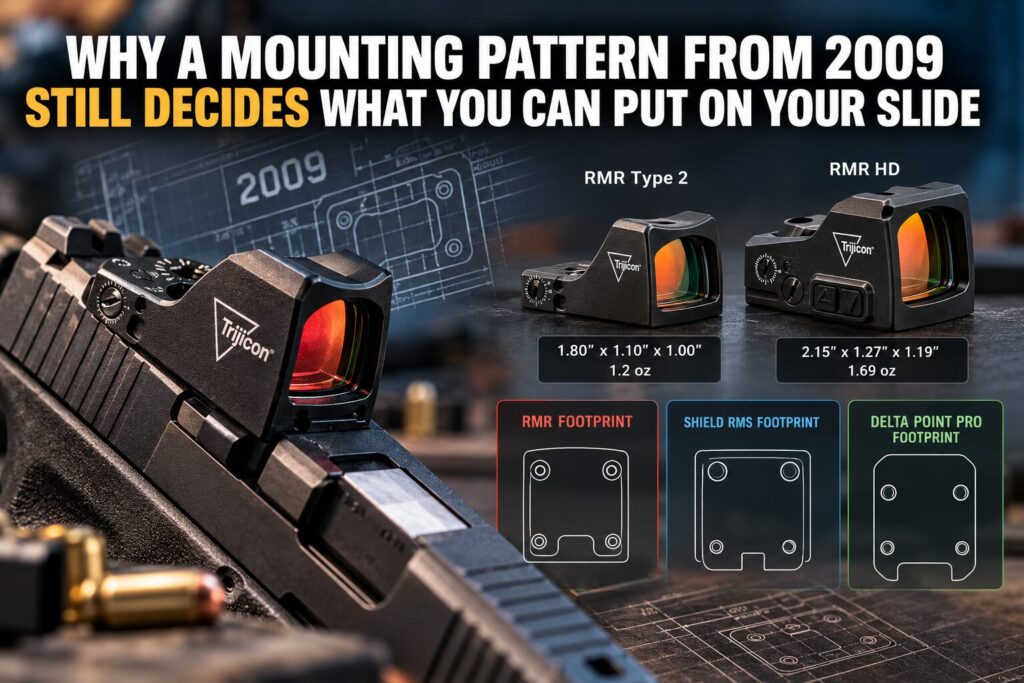
A footprint is just the arrangement of screw holes and recoil lugs on the bottom of an optic. Nothing glamorous. But it determines whether a sight physically bolts to your slide, and once enough manufacturers mill for one pattern, that pattern stops being a design choice and becomes infrastructure.
The RMR footprint got there first and got there hardest. Slide manufacturers cut for it, plate systems supported it, holster makers accounted for it. Gunsmiths could quote a job without asking twenty questions first.
Which created a genuine problem for Trijicon when it came time to build something better. Change the footprint and you orphan a decade of slides. Keep it and you constrain the engineering.
What Trijicon actually did about it
The Trijicon RMR HD kept the footprint. Trijicon states it is compatible with most firearms already set up for an RMR, including slides milled up to .180 inches, which means an existing cut, plate or mount should carry straight across.
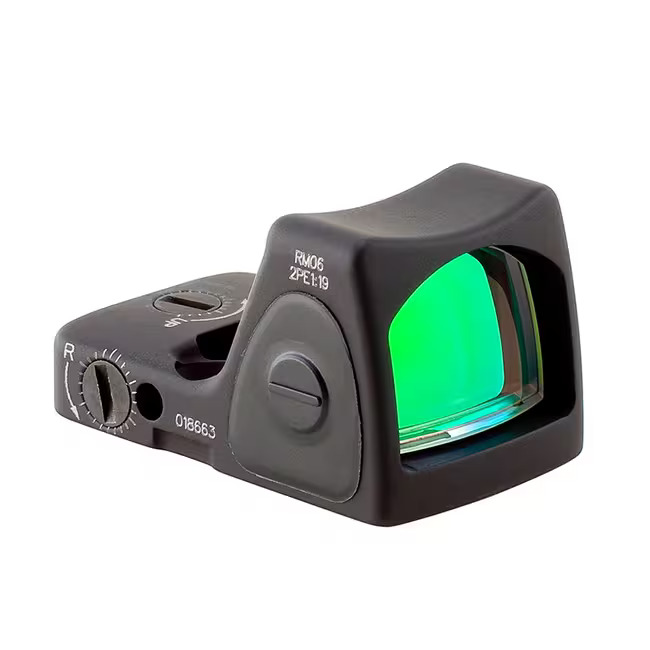
That decision shows up again in the enclosed RCR, which also rides the RMR pattern rather than introducing a new one. Two different optics, two different design briefs, one mounting interface.
The constraint is visible in the dimensions. The Trijicon RMR Type 2 measures 1.8 by 1.1 by 1.0 inches at 1.2 ounces. The HD grew to 2.15 by 1.27 by 1.19 inches and 1.69 ounces. Every feature that got added, the top-loading battery compartment, the forward-facing sensor, the larger buttons, had to fit around a mounting pattern that was fixed before the design work started.
Hold both and the HD is noticeably the bigger object. That extra length can overhang the back of a cut on a compact or subcompact slide depending on how yours was milled, which is worth measuring before you commit rather than after.
Footprint is not one standard, it’s several
Here’s where buyers get caught out. RMR is dominant, not universal, and manufacturers run multiple patterns inside their own lineups.
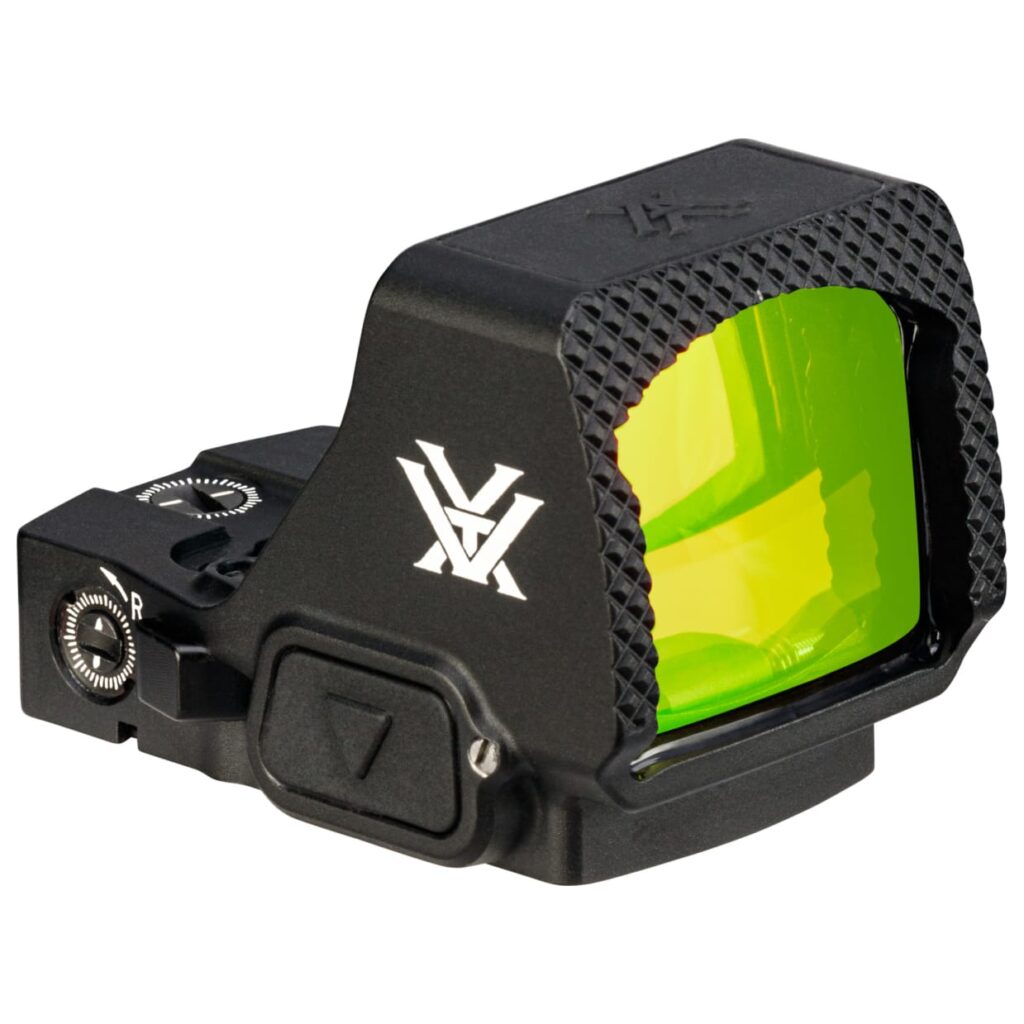
Vortex is a clean illustration. Its Defender-CCW Enclosed Solar is built on a Shield RMS pattern while the Defender-ST Enclosed Solar uses DeltaPoint Pro. Same brand, same enclosed micro red dot category, two incompatible mounting standards.
So “it’s a micro red dot, it’ll fit” is not a safe assumption, and neither is “it’s the same brand as my last one.”
What to confirm before ordering
Four things, and all of them take minutes rather than hours.
Find out what your slide is actually cut for. If it came optics-ready from the factory, the manual or the maker’s site will say. If a gunsmith milled it, ask them rather than guessing from photographs.
Work out whether you need an adapter plate, and whether it’s included. Plenty of optics ship without one, and plate quality varies more than people expect.
Check height and whether you still want irons that co-witness. Changing optic dimensions changes what your sights do.
Confirm the holster fits separately. Footprint compatibility says nothing about whether your current holster clears a taller or longer optic, and a new optic frequently means a new holster whether you budgeted for one or not.
Manufacturer footprint diagrams settle most of these questions, and most brands publish them as free PDFs. Retail listings throw pattern names around loosely, so go to the drawing.
Why this matters more than the feature list
Features get compared endlessly. Reticles, brightness settings, battery life, sensor placement. All worth considering, and the detailed Trijicon RMR vs RMR HD comparison works through where the two families genuinely diverge on controls, dot options and dimensions.
But none of it matters if the thing won’t mount. Footprint is the gate every other consideration passes through, and it’s the one most buyers check last.
Worth noting too that an optic is only part of the setup. Getting consistent behind a red dot takes range time regardless of which pattern it bolts to, and if you’re newer to carrying a handgun, building that confidence systematically matters more than the specification sheet you agonized over.
For anyone cross-shopping beyond one brand, the wider field of Trijicon red dot sights and competing patterns is worth surveying before you have a slide milled, because milling is the one decision in this chain you can’t easily reverse.
The footprint you choose today determines what you’re allowed to buy in five years. Choose accordingly.