 www.GunsandOptics.com Tactical & Hunting Gear Review
Ask which binocular is brightest at last light and you’ll get a confident answer. Ask for the maths behind it and things fall apart quickly.
Run the two standard formulas across these three configurations and they disagree. Not slightly. They pick different winners.
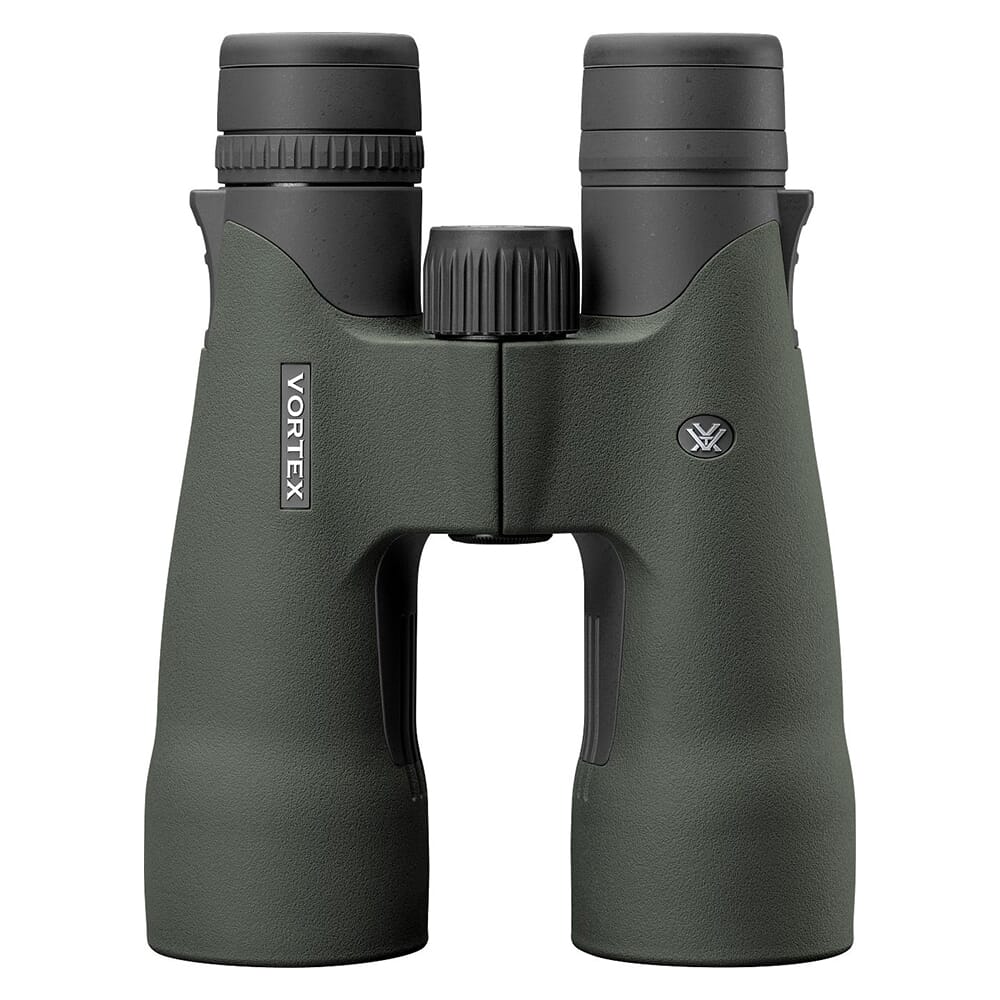
The three optics worth putting against each other here are the Vortex Razor UHD 10×50, which sits at the top of that brand’s Vortex binocular lineup, alongside two Austrians: the Swarovski NL Pure 8×42 and the Swarovski SLC 8×56. Three formats, three different theories about what low light actually demands.
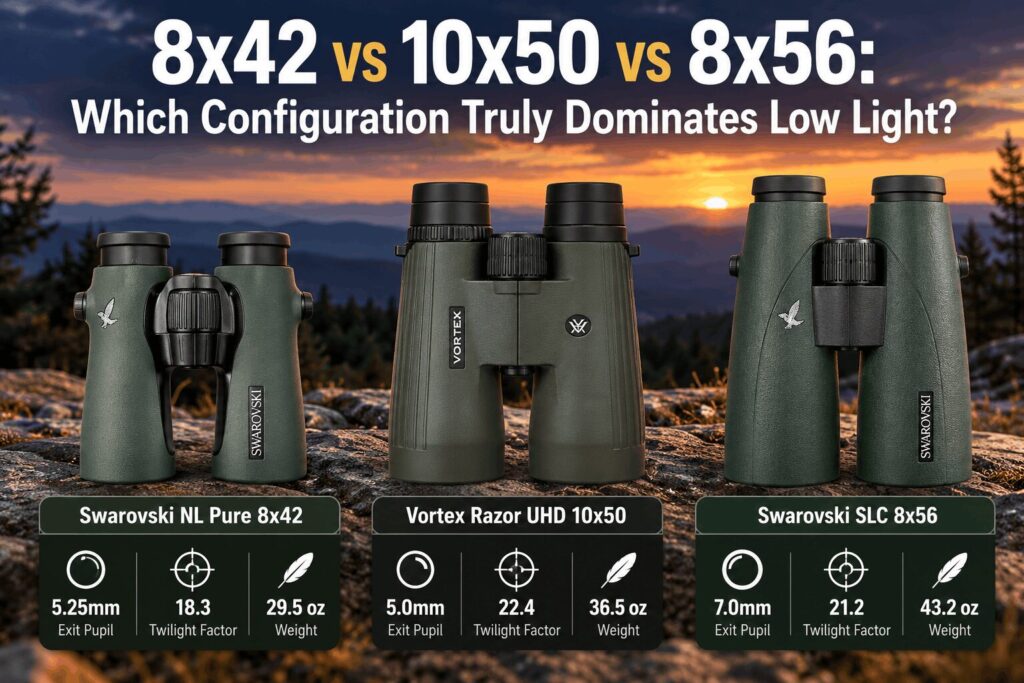
That the formulas can’t agree on a winner isn’t a flaw in the formulas. It’s proof that “bright” isn’t one thing.
Why “low light performance” isn’t one specification
Two numbers get quoted whenever low light binoculars come up, and they measure different properties.
Exit pupil describes the diameter of the light column leaving the eyepiece. Twilight factor is a resolution estimate that rewards magnification as well as aperture. One is about how much light arrives at your eye. The other is about how much detail you can pull out of what arrives.
Swarovski publishes both formulas in its own optics guide, which is a reasonable starting point since it’s a manufacturer explaining its own specifications rather than a retailer paraphrasing one.
Exit pupil explained, and where the 8×56 pulls ahead
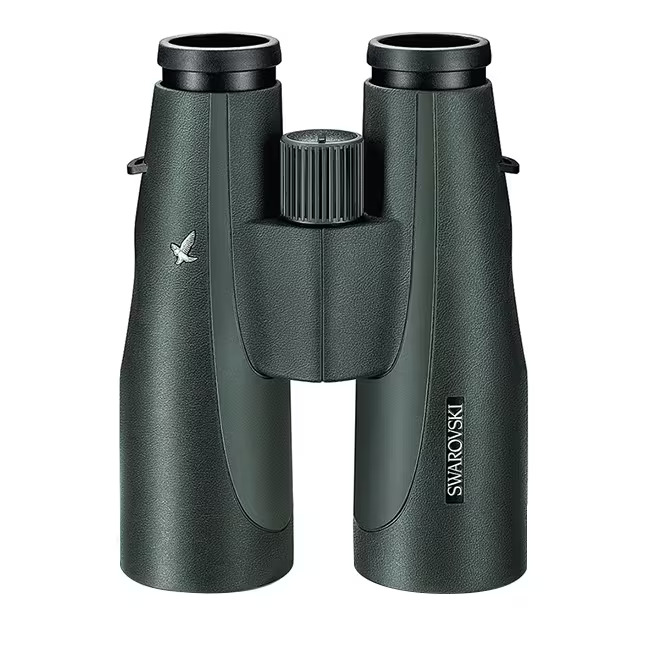
Divide objective diameter by magnification. That’s the whole calculation.
For the SLC 8×56, 56 divided by 8 gives 7.0mm. For the NL Pure 8×42, 42 divided by 8 gives 5.25mm, which Swarovski rounds to 5.3 in its published specs. For the Razor UHD 10×50, 50 divided by 10 gives 5.0mm.
So on exit pupil binoculars ranking, the 56mm Swarovski wins outright and it isn’t close. Seven millimeters against five and a quarter.
Swarovski’s own guidance says it plainly: a larger exit pupil means more light reaching the eye, and higher magnification shrinks the exit pupil and reduces brightness. Both Swarovski configurations sit within the wider Swarovski binoculars range, and on this metric alone the 8×56 case writes itself.
Hold that thought, because there’s a catch coming.
Twilight factor explained, and why it ranks the 10×50 first
Twilight factor takes the square root of magnification multiplied by objective diameter.
The Razor UHD 10×50 comes out at roughly 22.4. The SLC 8×56 lands at 21.2, matching Swarovski’s published figure. The NL Pure 8×42 sits at 18.3, also matching Swarovski’s published ISO-standard number.
The ranking just flipped. The 10×50 leads, the 8×56 is second, the 8×42 finishes a clear third.
Why? Because twilight factor binoculars comparisons reward magnification alongside aperture. More power resolves finer detail, and at dusk the question often isn’t whether you can see something. It’s whether you can tell what it is. That distinction between detecting and identifying runs through a lot of optics decisions, and it’s the same thinking behind choosing between a ballistic scope and a separate rangefinder for long-range work.
The metric carries a real weakness, though, and it deserves stating. Twilight factor assumes every binocular has identical glass and coatings. It accounts for transmission not at all. Two 10x50s with wildly different optical systems return exactly the same twilight factor, which tells you how much weight it can bear.
The limit nobody mentions: your own pupil
Here’s where the exit pupil argument runs into biology.
A 7mm exit pupil only helps if your own pupil opens to 7mm. Anything wider than your pupil spills onto your iris and does nothing at all.
Research published in the Journal of Refractive Surgery measured dark-adapted pupil diameter across age groups. Participants in their twenties averaged 7.33mm. By the thirties that dropped to 6.64mm, by the forties to 6.15mm, and by the fifties to 5.77mm.
Set those numbers against the three configurations and the picture shifts.
Someone in their twenties can use nearly all of the SLC’s 7mm column. Someone in their fifties, averaging around 5.77mm dark-adapted, uses roughly 5.8mm of it and wastes the remainder. At that point the NL Pure’s 5.25mm exit pupil is very nearly being consumed in full, and the gap between the two closes to far less than the spec sheets suggest.
None of which makes the 56mm a poor choice. The larger objective still gathers more light overall, and transmission still counts. But the headline exit pupil advantage shrinks as the buyer gets older, and that rarely gets said out loud in gear coverage.
Handheld steadiness and perceived brightness
Magnification multiplies hand tremor along with everything else in the image. The principle is well established, and it’s why higher-power binoculars push people toward tripods.
What matters in failing light is that an unsteady image reads as a worse image. Fine detail smears, your eye works harder at every edge, and the practical sensation is of a dimmer view even when the optics deliver identical light.
Weight compounds it. The Razor UHD 10×50 runs 36.5 ounces, the SLC 8×56 runs 43.2. Both are heavy enough that long freehand sessions get tiring, and tired arms shake more. Put the 10×50 on a tripod and its twilight factor advantage gets a chance to show. Hang it off a neck strap at the end of a long day and it doesn’t.
The 8×42 is the outlier at 29.5 ounces, and 8x forgives an unsteady hold in a way 10x doesn’t.
Glass quality, coatings and transmission
This is the variable both formulas ignore completely.
Swarovski publishes 93% light transmission for the SLC 8×56 and 91% for the NL Pure 8×42. Vortex publishes no transmission percentage for the Razor UHD 10×50, listing instead its UHD optical system, APO design, XR Plus coatings and an Abbe-Koenig prism, which the company describes as a larger prism with a longer optical path that produces sharper resolution.
Without a published figure there’s no honest way to rank all three on transmission, and anyone who does is guessing. What can be said is that two binoculars with matching exit pupils and matching twilight factors can still deliver visibly different images. That’s exactly what the formulas fail to capture.
The sweet-spot matrix
Dense woodland rewards field of view and close focus over raw reach. The NL Pure 8×42 shows 477 feet at 1,000 yards, against 400 feet for the SLC and 341 feet for the Razor UHD. It also focuses down to 6.6 feet where the SLC needs 12.8. For wildlife watching rather than hunting, that wide, close-focusing view is also why Swarovski built its AI-assisted AX Visio around a similar format.
Open plains and western glassing is where the 10×50 earns its weight, especially with a tripod underneath. Identifying an animal across a basin is a resolution problem, and resolution is what twilight factor is trying to describe.
Static stand use at dawn and dusk belongs to the 8×56. You aren’t carrying it far, you aren’t hand-holding it for hours, and the 56mm objective paired with 23mm of eye relief is a comfortable place to sit through forty minutes of fading light.
Anyone shortlisting the best binoculars for low light hunting is really choosing between those three descriptions, not between three brands.
So before comparing any spec sheet, work out your own exit pupil ceiling. It costs nothing to find out, and it determines how much of a 7mm light column you’re physically able to use.