 www.GunsandOptics.com Tactical & Hunting Gear Review
Here’s a question worth sitting with before you spend a dime: if a scope can already tell you how much to hold over, why are you still carrying a separate rangefinder in your pack? It’s a fair thing to ask, and the honest answer depends entirely on which kind of smart scope you’re looking at—because two of the biggest names in this space solved the problem in completely different ways.
What a Built-In Ballistic Calculator Actually Does
Load your ammo’s specs into the system—bullet weight, velocity, ballistic coefficient, whatever the platform asks for—and a built-in ballistic calculator scope does the math you’d otherwise be doing by hand or fumbling through on a phone app mid-hunt. Range the target, and the scope (or a connected device) works out exactly where to hold for distance, wind, and even angle, then shows you that point directly in the reticle. No dialing turrets, no guessing, no squinting at a cheat sheet taped to your stock. That’s the pitch, anyway. Whether you still need a rangefinder in your pocket alongside it is where things actually get interesting.
Two Different Approaches to the Same Problem
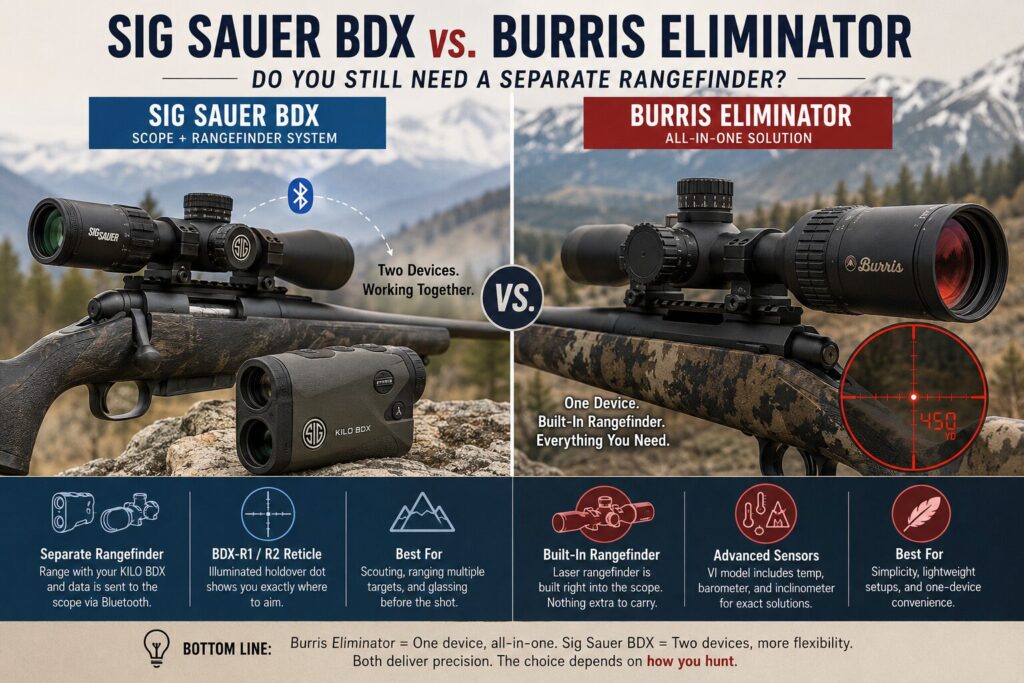
Not all smart scopes solve this the same way, and the difference matters more than most marketing copy lets on. Some scopes build the rangefinder right into the housing, so the whole system lives in one unit on top of your rifle. Others keep the rangefinder as its own separate device and lean on Bluetooth to pass information back and forth. Both get you to a similar end result—an illuminated holdover point—but they get there through genuinely different hardware, and that changes what ends up in your pack.
Burris Eliminator: The Rangefinder Built Into the Scope
Burris Eliminator scopes take the straightforward route: put the laser rangefinder inside the scope itself, so there’s nothing else to carry. The Burris Eliminator IV ranges out to 2,000 yards, runs its ballistics calculations onboard, and activates the laser over Bluetooth rather than making you fumble for a separate button. Point, range, get your dot. The Burris Eliminator V trims things down into a lighter build without giving up that same integrated rangefinder, projecting its holdover onto the X96 reticle so you’re never juggling a second device mid-shot.
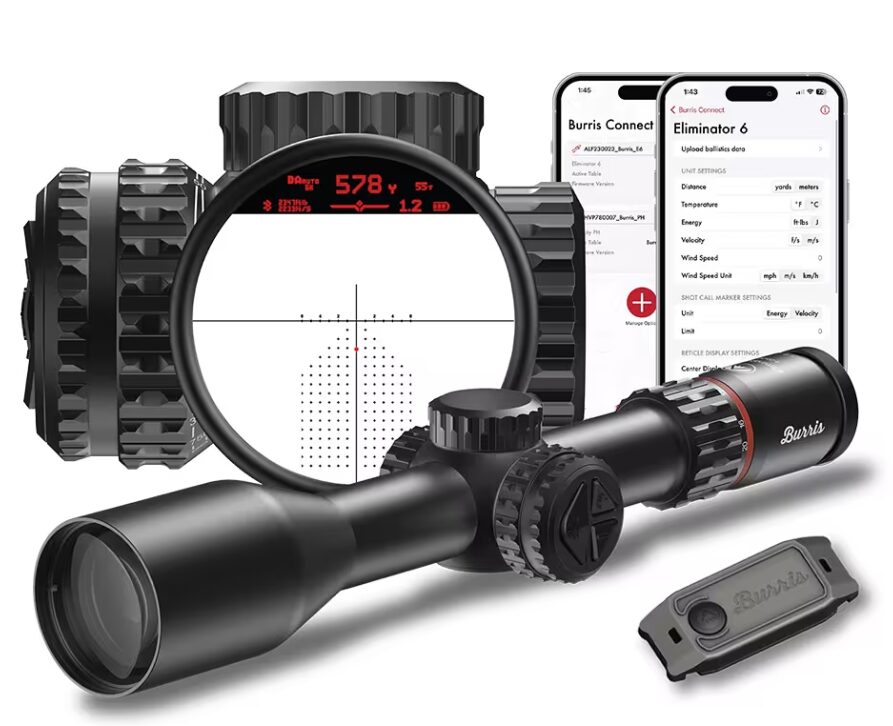
Then there’s the Burris Eliminator VI, which pushes the idea further than the others. It adds a built-in thermometer, barometer, and inclinometer, so the scope isn’t just accounting for distance—it’s factoring in density altitude and environmental conditions too. All of that gets built out through the BurrisConnect app and uploaded straight to the scope. With any of these three, what you’re buying is one piece of gear that used to be two.
Sig Sauer BDX: Scope and Rangefinder, Talking to Each Other
Sig Sauer went a different direction with its BDX—Ballistic Data Xchange—system, and it’s worth understanding before you assume it works like Burris does. The Sig Sauer Sierra3BDX and Sig Sauer Sierra6BDX riflescopes house the illuminated BDX-R1 or BDX-R2 reticle, but neither one has a rangefinder built in. That job belongs to Sig’s separate Sig Sauer KILO BDX rangefinder lineup, running from the Kilo1400BDX up through the Kilo3000BDX. Range your target with the KILO unit, and it sends the distance along with a full ballistic solution to the paired scope over Bluetooth, where an illuminated dot shows up right where you need to hold.
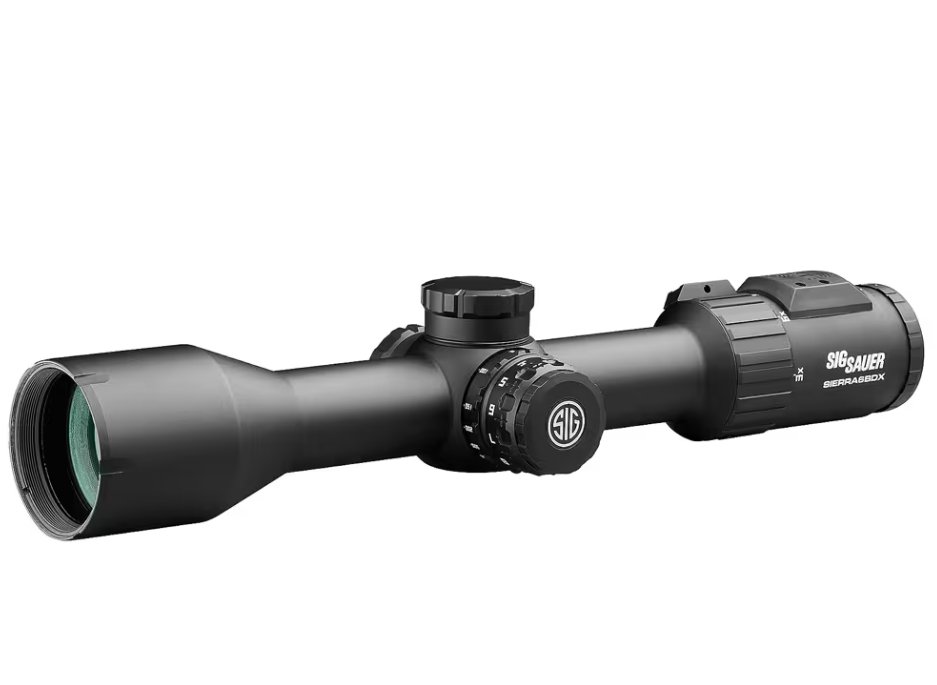
It’s a genuinely capable system, and EuroOptic sells the two pieces bundled as Sig Sauer BDX Combo Kits so you’re not stuck guessing which rangefinder plays nicely with which scope. But it’s worth being clear-eyed about what you’re actually buying: two devices, not one. Sig Sauer BDX automates the math between them beautifully—you’re just still carrying both.
So—Do You Still Need a Separate Rangefinder?
Depends on which system you pick, and there’s no point dancing around that. Go with a Burris Eliminator, and the answer is genuinely no—the rangefinder lives inside the scope, full stop. Go with Sig Sauer BDX, and the answer is yes, you’re still carrying a rangefinder; it’s just a smarter one that talks to your scope instead of you doing the mental math yourself. Neither approach is wrong. They’re just solving for different things, and it’s worth knowing which trade-off you’re actually making before you buy.
Which Approach Fits Your Hunt
If simplicity is the priority—one device on the rifle, nothing else to fish out of a pack—an integrated system like the Eliminator line is hard to beat. There’s less to forget at camp, less to keep charged, and one less thing rattling around in your bag on a long stalk.
But there’s a real case for keeping the rangefinder separate, too. A standalone unit like the KILO BDX lets you range and glass well before you’re anywhere near ready to shoot—scouting a ridgeline, checking distances on a stand setup, and ranging multiple potential shot lanes without ever shouldering the rifle. That’s a genuinely different use case than “range and shoot in one motion,” and for a lot of hunters, being able to do recon with the rangefinder alone is worth carrying the second piece of gear.
A Few Quick Questions
Does a built-in ballistic calculator replace good shooting fundamentals?
No. It removes the guesswork from holdover, but it doesn’t replace a solid rest, a practiced trigger squeeze, or knowing your rifle’s actual capabilities at distance.
Can I use a Sig BDX rangefinder without the matching scope?
Yes, the KILO BDX rangefinders work fine on their own for ranging and glassing. You just won’t get the automatic holdover dot in your reticle without a paired BDX scope.
Is one system more reliable than the other in cold weather or low-battery situations?
Both rely on batteries and electronics, so neither is immune to cold-weather drain. It’s worth carrying spares and knowing your scope’s mechanical backup—most Eliminator and BDX scopes still function as standard optics if the electronics ever quit.